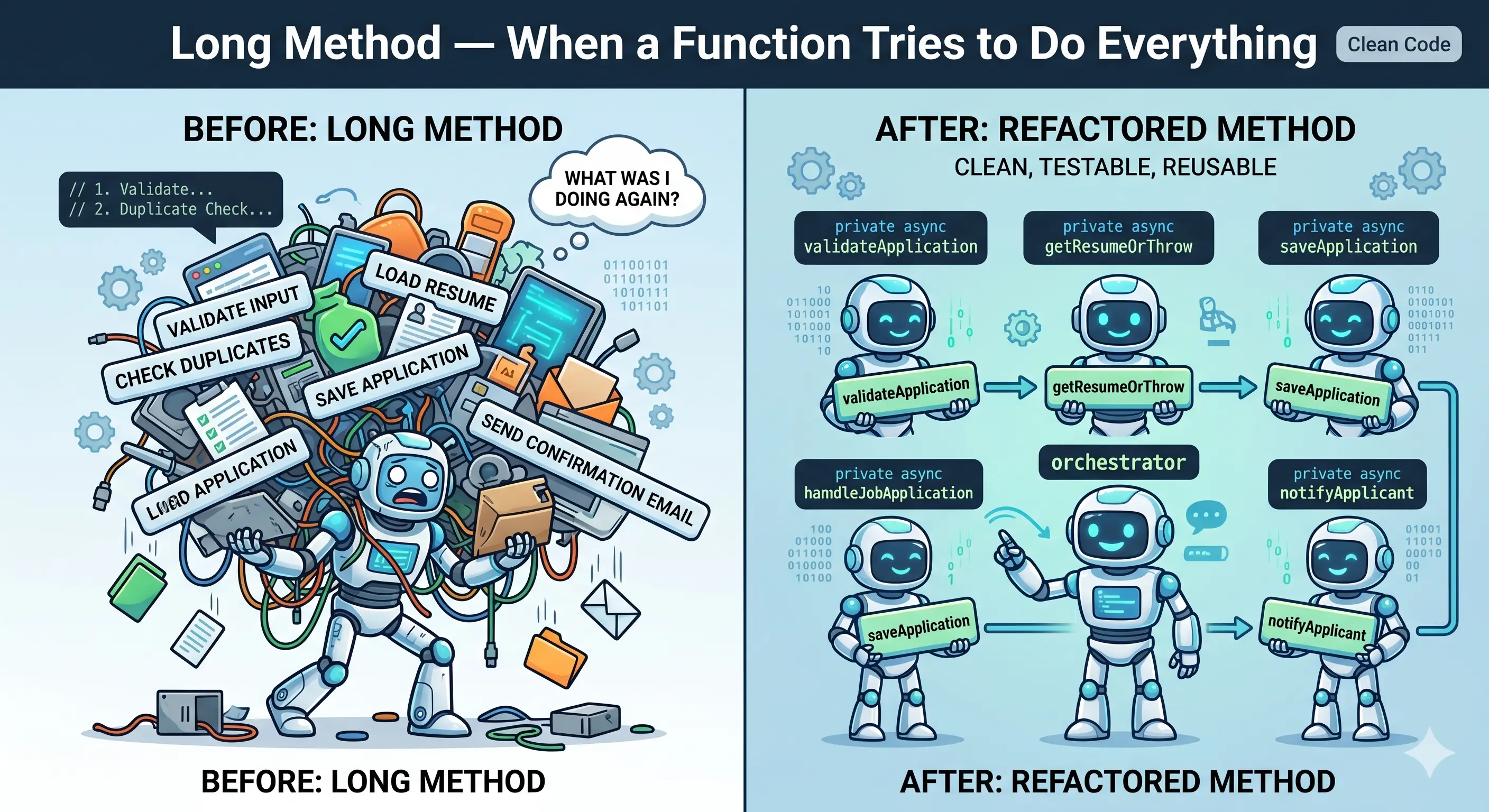
How to spot it
- The function name contains
and,also, orwith—fetchAndSaveUser,validateAndSendEmail - There are comment blocks inside acting as section headers —
// 1. Validate,// 2. Save - You can't write a single unit test without mocking half the app
- Changing one scenario forces you to edit the middle of a big function
A real example
handleJobApplication method you might find in a NestJS service:
// ❌ God Function — 5 responsibilities in one place
async function handleJobApplication(dto: ApplyJobDto, userId: string) {
  // 1. Validate input
  if (!dto.jobId || !dto.coverLetter) {
    throw new BadRequestException('Missing fields');
  }

  // 2. Check for duplicate application
  const existing = await this.applicationRepo.findOne({
    where: { jobId: dto.jobId, userId },
  });
  if (existing) throw new ConflictException('Already applied');

  // 3. Load resume
  const resume = await this.fileService.getFile(dto.resumeFileId);
  if (!resume) throw new NotFoundException('Resume not found');

  // 4. Save application
  const application = this.applicationRepo.create({
    jobId: dto.jobId,
    userId,
    coverLetter: dto.coverLetter,
    resumeUrl: resume.url,
    status: ApplicationStatus.PENDING,
  });
  await this.applicationRepo.save(application);

  // 5. Send confirmation email
  const user = await this.userRepo.findOne({ where: { id: userId } });
  await this.mailer.sendMail({
    to: user.email,
    subject: 'Application received',
    template: 'job-application',
    context: { name: user.name, jobId: dto.jobId },
  });

  return application;
}The refactored version
// ✅ Each function does one thing
async function handleJobApplication(dto: ApplyJobDto, userId: string) {
  await this.validateApplication(dto, userId);
  const resume = await this.getResumeOrThrow(dto.resumeFileId);
  const application = await this.saveApplication(dto, userId, resume);
  await this.notifyApplicant(userId, dto.jobId);
  return application;
}

private async validateApplication(dto: ApplyJobDto, userId: string) {
  if (!dto.jobId || !dto.coverLetter) {
    throw new BadRequestException('Missing fields');
  }
  const existing = await this.applicationRepo.findOne({
    where: { jobId: dto.jobId, userId },
  });
  if (existing) throw new ConflictException('Already applied');
}

private async getResumeOrThrow(fileId: string) {
  const resume = await this.fileService.getFile(fileId);
  if (!resume) throw new NotFoundException('Resume not found');
  return resume;
}

private async saveApplication(
  dto: ApplyJobDto,
  userId: string,
  resume: FileEntity,
) {
  const application = this.applicationRepo.create({
    jobId: dto.jobId,
    userId,
    coverLetter: dto.coverLetter,
    resumeUrl: resume.url,
    status: ApplicationStatus.PENDING,
  });
  return this.applicationRepo.save(application);
}

private async notifyApplicant(userId: string, jobId: string) {
  const user = await this.userRepo.findOne({ where: { id: userId } });
  await this.mailer.sendMail({
    to: user.email,
    subject: 'Application received',
    template: 'job-application',
    context: { name: user.name, jobId },
  });
}
What you actually gain
- Testing — each piece can be tested in complete isolation
- Reuse —
notifyApplicantcan now be called from other flows - Change safety — updating email logic only touches
notifyApplicant, nothing else - Readability —
handleJobApplicationreads like a summary of the process
The rule of thumb
// Step 3 inside a function body, stop. That comment is telling you something.